Hardness load
Sizing should use actual hardness concentration and daily water demand.
Industrial water treatment
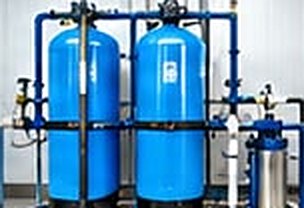
Ion-exchange softening removes calcium and magnesium hardness that can cause scale in boilers, heat exchangers, membranes and process equipment.
Engineering approach
A softener does not remove all dissolved salts; it primarily exchanges hardness ions for sodium. Correct sizing depends on hardness load, flow, regeneration interval and allowable outlet hardness for the process.
Process flow
Sizing should use actual hardness concentration and daily water demand.
Salt dose, brine concentration and regeneration sequence affect exchange capacity.
Iron, manganese, turbidity and organics can foul resin and reduce performance.
Routine outlet hardness testing catches exhaustion and valve-sequence problems early.
Aqua Chem Labs provides softener audits, resin cleaning/regeneration, valve troubleshooting and AMC support.
Final equipment configuration, chemical dosing and operating targets should be based on actual water analysis, plant load and applicable discharge/process requirements.
Technical resource
See the expanded softener guide for ion-exchange chemistry, regeneration, operating checks and troubleshooting.
Open technical guideIt primarily exchanges calcium and magnesium hardness for sodium ions. It does not replace RO or demineralisation when dissolved-salt reduction is required.
Possible causes include resin exhaustion, inadequate regeneration, channeling, valve sequencing faults, resin fouling or excessive service flow.
For critical applications, frequent outlet-hardness checks are a practical way to detect breakthrough before it reaches downstream equipment.