
Peak flow
Design should account for diurnal variation and hydraulic peaks, not only average daily flow.
Industrial water treatment
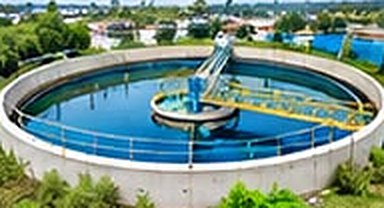
Reliable sewage treatment starts with correct hydraulic loading, biological conditions and routine monitoring—not just installing a standard tank arrangement.
Engineering approach
Sewage quality varies with occupancy, hydraulic peak factors, infiltration and operating habits. Biological treatment performance depends on aeration, sludge age, MLSS, DO and nutrient balance, while final water quality may require filtration and disinfection.
Process flow
Design should account for diurnal variation and hydraulic peaks, not only average daily flow.
Air delivery and DO control are central to stable biological oxidation.
Return and wasting strategies affect MLSS, settling and treatment stability.
Filtration and disinfection should be matched to the intended reuse application.
Support can include erection, commissioning, biological seeding guidance, troubleshooting, operator checklists and AMC.
Final equipment configuration, chemical dosing and operating targets should be based on actual water analysis, plant load and applicable discharge/process requirements.
Technical resource
Use the expanded STP manual for biological process fundamentals, monitoring, operating checks and troubleshooting.
Open technical guideCommon causes include septic conditions, inadequate aeration, overloaded or poorly mixed zones, excessive solids accumulation and poor sludge handling.
Reuse depends on final water quality, the receiving application and applicable local requirements. Tertiary filtration and disinfection are often used for higher-quality reuse.
Routine checks should cover flow, pH, DO, MLSS, sludge wasting, blower operation, settling behaviour, filtration and disinfection performance.